Carpenter Ant Control in Westchester County: Identifying and Eliminating Structural Infestations
Carpenter ants cause real structural damage to Hudson Valley homes. BluesWay Pest Control explains how to identify activity, understand the colony structure, and eliminate infestations in Westchester, Rockland, and the Bronx.
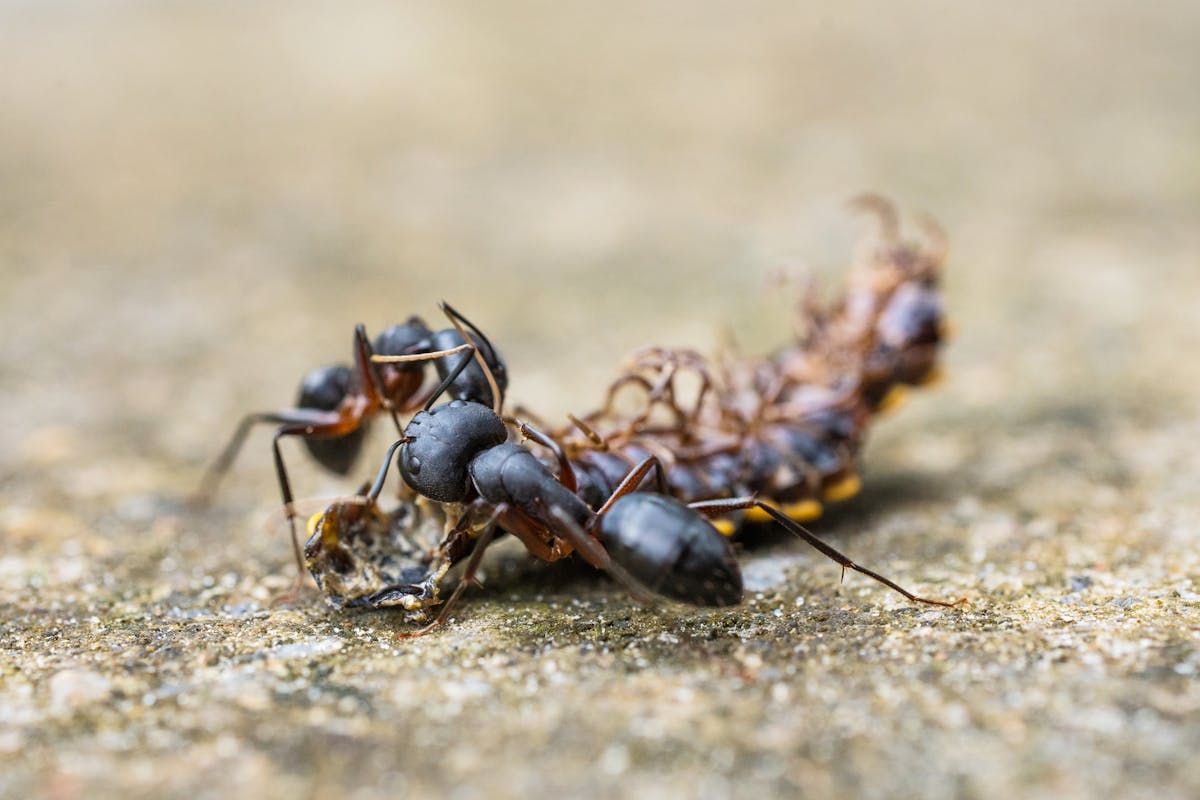
Carpenter Ants in the Hudson Valley: A Structural Threat Hiding in Plain Sight
Every spring, homeowners across Westchester County begin finding large black ants — sometimes winged — crawling along baseboards, windowsills, and kitchen counters. Most people assume they're dealing with a simple ant problem and reach for a can of spray. But if those ants are carpenter ants (*Camponotus pennsylvanicus*), you're looking at a pest that excavates wood to build its colony — and your home's structural framing is the construction material.
At BluesWay Pest Control, carpenter ants are one of the top five reasons homeowners in Tarrytown, Ossining, Pelham, and Stony Point call us every year. The Hudson Valley's combination of older housing stock, wooded lots, and high moisture creates near-perfect conditions for these destructive insects.
How to Identify Carpenter Ants
Carpenter ants are significantly larger than common household ants — workers range from 1/4 to 1/2 inch long, and queens can reach 3/4 inch. They're usually black, though some species have reddish-brown coloring. Key identification features:
• Size matters. If the ants in your house are noticeably larger than pavement ants or sugar ants, suspect carpenter ants.
• Single node. Carpenter ants have a single, smooth-topped node (waist segment) between thorax and abdomen. Pavement ants have two nodes.
• Winged reproductives. Finding winged carpenter ants inside your home between March and June means there's an established colony in or directly adjacent to the structure.
• Nocturnal activity. Carpenter ants forage primarily at night. Turn on kitchen lights at midnight and watch the baseboard — if large black ants are moving, you likely have a satellite colony.
Parent Colonies vs. Satellite Colonies
Understanding carpenter ant colony structure is essential to effective treatment. A mature colony operates as a network:
Parent colony — Located outdoors in a tree stump, dead tree, or landscape timber. Contains the queen, eggs, and young larvae. Requires consistent moisture. The parent colony in a rotting oak 50 feet from your foundation is the source of your problem.
Satellite colonies — Established inside your home, typically in moisture-damaged wood. Contains workers, older larvae, and pupae. Does NOT require the constant moisture of the parent colony. Satellite colonies in wall voids, window frames, and floor joists are where structural damage occurs.
Killing ants inside the house without addressing the parent colony means new satellite colonies will keep appearing. Professional treatment targets both.
Where We Find Damage in Westchester Homes
Our inspectors find carpenter ant damage in predictable locations throughout the older housing stock of Westchester, Rockland, and the Bronx:
• Window frames and sills — especially north-facing windows where condensation and rain exposure keep wood moist
• Bathroom wall cavities — plumbing leaks create moisture that softens wood and attracts colonies
• Roof-to-wall intersections — ice dam damage and flashing failures create hidden moisture
• Sill plates and band joists — the most vulnerable structural members, sitting directly on the foundation
• Porch and deck connections — where wood framing meets the house
In Victorian-era and pre-war homes common in Mamaroneck, Bronxville, and Sleepy Hollow, carpenter ant damage frequently occurs in structural members that haven't been visible in decades — behind plaster walls, under original flooring, and in unfinished basement ceilings.
The Telltale Signs
Frass. Unlike termites, carpenter ants don't eat wood — they excavate it and push the debris out. This "frass" looks like small piles of coarse sawdust mixed with insect body parts. Finding frass below a wall void, near a window frame, or in a basement corner is strong evidence of an active colony.
Rustling sounds. Large carpenter ant colonies produce audible sounds inside wall voids — a faint rustling or crinkling when the house is quiet at night. Tap the suspected area and listen for increased activity.
Winged swarmers indoors. This is the clearest confirmation. Carpenter ant swarmers found inside the home between March and June mean a mature colony (3+ years old) is established in the structure.
Professional Treatment Protocol
BluesWay's carpenter ant treatment addresses the full colony network:
1. Thorough inspection — We trace foraging trails, identify satellite colony locations using moisture meters and listening devices, and locate the likely parent colony outdoors.
2. Interior treatment — Targeted application of non-repellent insecticide into wall voids, window frames, and confirmed gallery locations. Non-repellent products are critical — they don't alert ants to avoid treated areas, allowing workers to transfer the product throughout the colony.
3. Exterior perimeter treatment — Barrier application around the foundation, plus direct treatment of any identified outdoor parent colony sites (stumps, landscape timbers, dead trees).
4. Moisture recommendations — Because carpenter ants follow moisture, we identify and recommend fixes for the conditions that attracted them: leaking pipes, poor drainage, inadequate ventilation in crawl spaces, ice dam damage.
5. Follow-up monitoring — Carpenter ant colonies don't die overnight. We schedule follow-up visits to confirm elimination and check for any secondary colony activity.
Prevention for Hudson Valley Homeowners
• Fix moisture problems first. A dry home is far less attractive to carpenter ants than a damp one.
• Remove dead wood from your yard — stumps, fallen branches, and landscape timbers within 30 feet of your foundation are parent colony habitat.
• Trim branches away from the house — carpenter ants use tree branches as highways to access roof areas and upper-story wall voids.
• Store firewood elevated and away from the house — never stack firewood against the foundation.
• Address ice dam damage promptly — the moisture damage from winter ice dams is one of the most common carpenter ant attractors in our region.
Don't Wait — Carpenter Ant Damage Compounds
Unlike nuisance ants that are simply annoying, carpenter ants cause real financial damage. A satellite colony active for three years in a floor joist can compromise the structural integrity of that member. We've inspected homes in White Plains and New Rochelle where carpenter ant galleries extended through multiple structural members — repair costs that dwarfed the treatment expense.
Call BluesWay Pest Control at (914) 968-8404 for a carpenter ant inspection. Our licensed exterminators know exactly where to look in Hudson Valley homes — and how to eliminate the colony, not just the ants you see.